
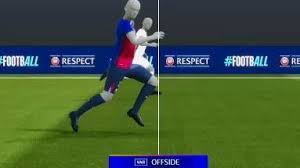
The offside rule is among the most analysed and debated regulations in football, generating controversy at every level of the sport from grassroots competition to World Cup finals. Understanding what offside means in football — and how the rule has been updated in recent years — is essential context for following the modern game. Sports platforms covering football at professional depth, including 1xbet download android, regularly feature matches where offside decisions determine outcomes, reverse goals, and shift tactical approaches across entire seasons. The regulation has undergone significant evolution since its codification, and the changes introduced heading into the 2025 season represent the most consequential adjustment in how the rule is applied since the introduction of VAR technology.
The offside rule exists for a straightforward competitive reason: without it, attacking players could permanently station themselves beside or behind the last defender, requiring no movement, no timing, and no athletic contribution beyond waiting for a long pass to arrive. The rule forces attackers to time their runs and engage with the defensive structure of the opposing team.
What Is an Offside in Football: The Core Definition
What is an offside in football under current Laws of the Game? Law 11, as maintained by the International Football Association Board (IFAB), establishes that a player is in an offside position when any part of the head, body, or feet is nearer to the opponent’s goal line than both the ball and the second-last opponent at the moment the ball is played by a teammate.
Several elements of this definition require precise unpacking.
The reference to the second-last opponent rather than the last defender accounts for the presence of the goalkeeper. In standard match situations, the goalkeeper is the last opponent — positioned closest to their own goal line. The relevant comparison for the attacking player’s position is therefore with the last outfield defender, who constitutes the second-last opponent. An attacker level with or behind that last outfield defender is onside regardless of where the goalkeeper is positioned.
The arms are explicitly excluded from the offside calculation. Shoulder and upper arm positions do not determine offside status — only the head, torso, and legs are considered. This exclusion reflects the principle that only body parts capable of legitimately scoring a goal are relevant to the offside determination.
Being in an offside position is not itself an offence. The offside offence occurs only when a player in an offside position becomes actively involved in play — by receiving the ball directly, by interfering with an opponent, or by gaining an advantage from the position.
What Does Offside Mean in Football: Active Involvement
The distinction between being in an offside position and committing an offside offence is central to how the rule operates in practice. A player who is technically beyond the last defender but who does not touch the ball, does not obstruct the goalkeeper’s vision or movement, and does not gain any advantage from the position has not committed an offside offence — even if the assistant referee’s flag is raised momentarily.
| Involvement Type | Definition | Offside Offence? |
| Playing or touching the ball | Directly receiving a pass while in offside position | Yes |
| Interfering with an opponent | Blocking goalkeeper’s sightline or movement | Yes |
| Challenging for the ball | Competing for a ball in an offside position | Yes |
| Gaining an advantage — rebound | Ball rebounds from post or crossbar to offside player | Yes |
| Gaining an advantage — deliberate save | Ball played by opponent to offside player | Yes |
| Passive position, no contact | Player offside but entirely uninvolved in play | No offence |
| Receiving from goal kick | Ball played directly from goal kick to offside player | No offence |
| Receiving from throw-in | Ball played from throw-in to offside player | No offence |
| Receiving from corner kick | Ball played from corner to offside player | No offence |
The three exempt delivery types — goal kicks, throw-ins, and corner kicks — represent situations where the ball enters play from a restart rather than from open play. The offside rule does not apply to any of these restarts, meaning a player can receive directly from any of them regardless of their position relative to the last defender.
The History of the Offside Rule
The offside regulation predates the formal codification of association football. Early versions of the rule required three opponents between the attacker and the goal line — a standard so restrictive that attacking play was severely suppressed and scoring was rare. The Football Association’s original Laws of 1863 incorporated a version of this three-player requirement.
The most significant historical change came in 1925, when the requirement was reduced from three opponents to two. The effect was immediate and dramatic: goals per game across the Football League increased substantially in the seasons following the amendment as defences struggled to adapt their positioning to the new standard. The two-opponent rule has remained the foundational structure of Law 11 ever since, with subsequent changes focusing on how the rule is interpreted and enforced rather than altering its basic threshold.
The introduction of Video Assistant Referee technology from 2018 onwards represented the first major operational shift in offside enforcement rather than the rule itself. VAR allowed marginal offside decisions — those involving centimetre-level differences between an attacker’s shoulder and a defender’s corresponding position — to be reviewed with frame-by-frame precision. This capability produced a wave of disallowed goals that visually appeared to be valid, generating sustained criticism of how the technology was being applied.
The New Offside Rule in Football: The 2025 Daylight Standard
The new offside rule in football as applied from 2025 addresses the most persistent criticism of semi-automated offside technology: that ultra-marginal decisions, invisible to the human eye and irrelevant to any realistic defensive action, were being used to disallow goals that every observer in the stadium considered valid.
| Aspect | Pre-2025 Application | 2025 Daylight Standard |
| Measurement precision | Sub-centimetre, pixel-level detection | Clear visible margin required |
| Marginal calls | Offside if any body part marginally ahead | Not offside without obvious separation |
| Benefit of doubt | Defending team in unclear cases | Attacking player in unclear cases |
| Frozen frame usage | Single frame at moment of pass | Contextual assessment preferred |
| Armpit/shoulder involvement | Applied to all non-arm body parts strictly | Same exclusions, less marginal impact |
| VAR review duration | 30–90 seconds average | Reduced — fewer marginal reviews |
| Attacker level with defender | Offside if fractionally ahead | Onside — level treated as onside |
The daylight principle requires a clear and observable gap between the attacking player’s relevant body part and the last defender’s corresponding body part before an offside offence is recorded. Positions that are level, or separated by margins that the officiating system cannot distinguish from level without pixel analysis, are treated as onside under the updated standard.
This represents a philosophical reversal from the pre-2025 standard. Previously, uncertainty in marginal cases resolved in favour of the defending team — an attacker whose position could not be definitively confirmed as onside was flagged offside. Under the 2025 framework, uncertainty resolves in favour of the attacking player, consistent with the broader principle in football law that clear and obvious evidence is required before a penalty is imposed.
Why the Daylight Standard Was Introduced
The regulatory background to the new offside rule involves both statistical analysis and a recognition that technology had drifted from the spirit of the regulation it was designed to enforce. Semi-automated offside systems use multiple tracking cameras and body-landmark detection to map player positions at the moment the ball is played. This infrastructure can identify positional differences of two to three centimetres with high confidence — a precision level that far exceeds what any linesman, however experienced, could replicate in real time.
IFAB’s review concluded that this level of precision was not aligned with how the offside rule had historically been applied. Assistant referees operating without technological assistance had always applied an informal daylight standard — flags were raised for positions that looked offside, not for positions that were offside by margins below the threshold of human visual perception. Semi-automated technology removed this informal tolerance, producing decisions that were technically correct under a strict reading of the law but contradicted the practical standard the law had been enforced to for decades.
Trials conducted in selected competitions prior to the formal adoption of the daylight standard demonstrated that the change did not produce a significant increase in goals scored from positions that were genuinely and obviously offside. The goals reinstated under the new standard were those that would never have been flagged under pre-VAR officiating — positions that appeared level and were processed as level by the assistant referee’s eye.
Tactical Implications of the Offside Rule
The offside rule shapes tactical structure across the entire pitch. Defensive teams use the offside trap — advancing the defensive line simultaneously to catch attacking runners in an offside position at the moment a pass is played — as a deliberate tactical tool. A well-executed offside trap neutralises a through-ball or lofted pass without requiring a physical challenge, effectively using the rule as a defensive mechanism.
The high defensive line, adopted by pressing-oriented teams to compress the space between their defensive and midfield units, relies on offside as a structural backstop. Defenders positioned forty or fifty metres from their own goal accept exposure to balls played in behind because the offside rule constrains when attackers can legitimately access that space. Without Law 11, the high defensive line would be tactically incoherent — a single forward run would immediately penetrate it.
Attacking teams, by contrast, develop timing and movement patterns specifically designed to remain onside at the moment of the pass while reaching an advanced position as quickly as possible after it. The moment of the pass is the legally relevant moment — what happens after the ball is played is irrelevant to the offside determination. Attackers who understand this precisely can time delayed runs that appear to start from behind the defensive line and arrive in space beyond it while remaining legally onside at the critical moment.
Common Misunderstandings About the Offside Rule
Several persistent misunderstandings about offside meaning in football are worth addressing directly. The rule applies at the moment the ball is played, not at the moment it is received — an attacker who is onside when the pass is struck cannot be offside regardless of where movement takes them before the ball arrives.
The rule does not apply when the ball is played by an opponent. A clearance, a goalkeeper’s distribution, or any other touch from the defending side resets the offside calculation — an attacker cannot be offside from a ball last touched by the defending team.
Finally, the offside rule does not apply in the defending half. A player cannot be offside in their own half of the pitch regardless of their position relative to any opponent. The rule activates only when a player is in the attacking half — beyond the halfway line — at the moment the ball is played.